
Lakefront Landscaping Projects — Hardscaping, Retaining Walls & Permeable Pavers for New Hampshire’s Lakes Region
In the scenic New Hampshire Lakes Region, we at Groundhog North specialize in lakefront landscaping that balances opportunity with challenge. We help homeowners improve their shoreline properties by guiding smart choices in hardscaping materials, retaining wall design, and permeable paving. This guide shares our expertise on practical options tailored specifically to lakeside homes — from selecting the best materials for hardscaping and designing retaining walls to prevent erosion, to the clear benefits of permeable pavers. With erosion control and curb appeal top priorities for property owners, our strategies help protect and enhance your waterfront. We cover material selection, wall design considerations, and what to expect when we install permeable pavers for lasting results.
Which hardscaping materials work best for lakeside homes in the NH Lakes Region?
We understand that picking the right hardscaping materials here is crucial because of the local climate and terrain. Our durable choices not only boost curb appeal but also withstand seasonal weather changes.
- Natural Stone: Durable and timeless, our natural stone blends seamlessly with the landscape and holds up exceptionally well near the water.
- Clay Brick: Versatile and long-lasting, clay brick offers beautiful earth tone colors and perfect for colonial style walkways and patios.
- Concrete Pavers: Cost-effective and flexible, concrete pavers provide the most varieties of patterns and colors combined with the strongest structural benefit.
For New Hampshire homeowners, we make choosing the right hardscaping materials easy and reliable, ensuring your property’s look and life are extended.
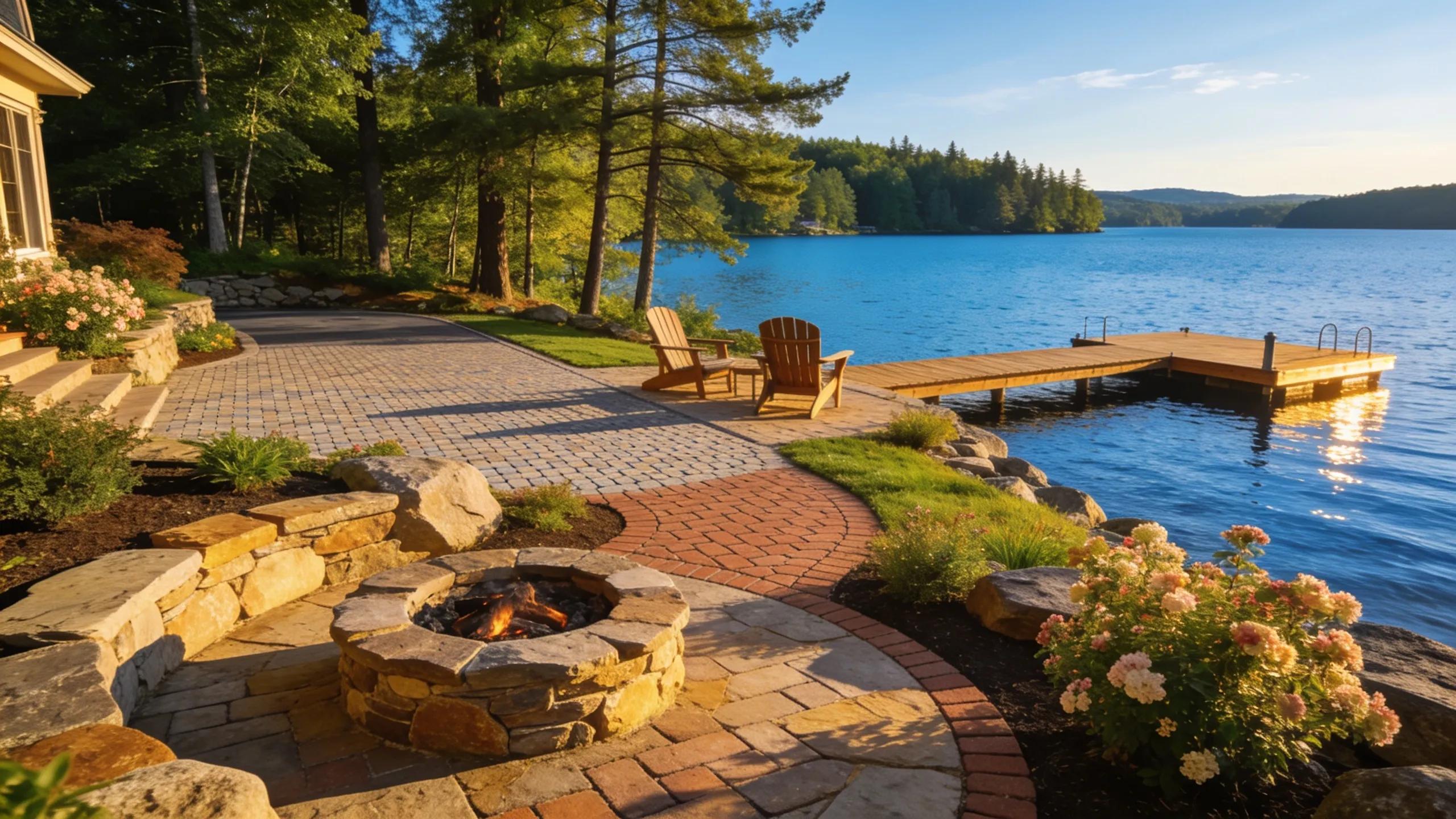
How do stone, brick, and concrete compare for lakefront hardscaping?
At Groundhog North, we know each material brings unique benefits. Natural stone delivers a classic, rugged look and excellent resilience to lakeside conditions. A natural earth product, clay brick offers a sublime, antiqued appeal with long-lasting color. Concrete pavers provide the most variety, ideal for customized patterns or colors to match your design goals while remaining strong and durable.
Why are climate and terrain important when choosing materials around NH lakes?
Because we work extensively in this region, we carefully consider climate and terrain to guide material choices. The Lakes Region experiences cold winters with freeze-thaw cycles and heavy spring rains, so materials must tolerate moisture and movement. Soil type influences drainage and erosion risk — permeable materials help reduce runoff, while heavier stone anchors slopes to prevent washout. By factoring in these conditions, we keep your landscape functional and long-lasting.
How can retaining walls protect your NH lakefront property from erosion?
We build retaining walls as a key defense against shoreline erosion. Our expertly constructed walls hold soil in place, restore usable yard space, and preserve the shoreline’s shape and stability.
- Soil Stability: Our retaining walls level sloped areas and reduce soil slumping into the water, increasing your usable outdoor space.
- Aesthetic Value: Well-designed walls from Groundhog North add character and curb appeal while serving a vital practical purpose.
- Enhanced Drainage: We incorporate built-in drainage features that prevent water buildup behind the wall, protecting both the structure and the surrounding landscape.
Investing in our quality retaining wall construction enhances both the appearance and resilience of your waterfront property.
What materials and designs work best for retaining walls near lakes?
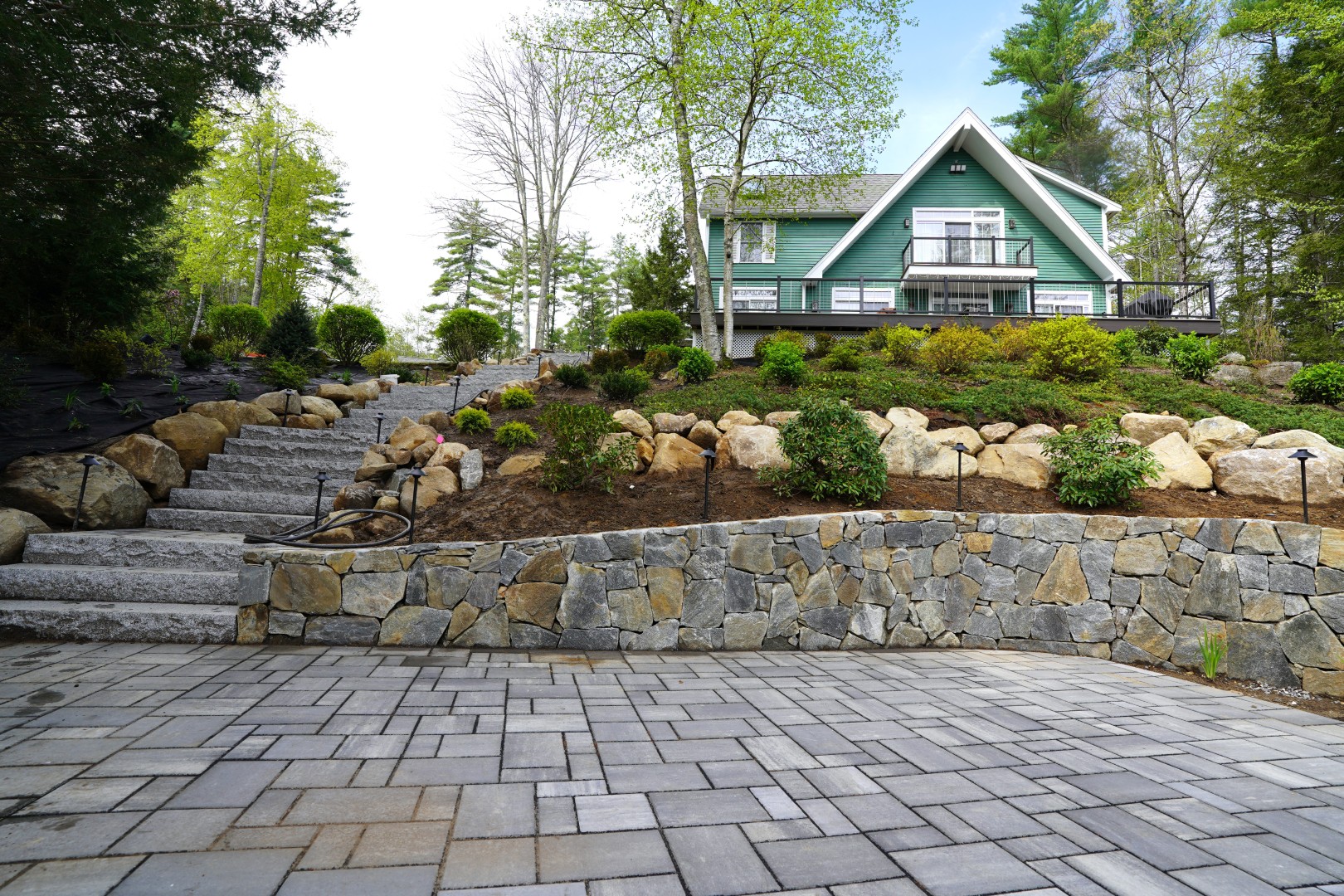
When choosing materials and designs for lakeside retaining walls, we balance function, appearance, and environmental impact.
Our common materials for retaining walls include:
- Natural Stone: Durable with a rustic look that harmonizes with the shoreline environment.
- Retaining Wall Block: Sleek, cost-effective, and reliable for modern wall designs.
Each option suits different site conditions, and at Groundhog North, we design and build retaining walls to meet local standards and the specific needs of lakeside properties.
How does our professional installation ensure durability and compliance in the NH Lakes Region?
Our expertise makes all the difference. We carefully account for drainage, soil mechanics, freeze-thaw cycles, and handle local permitting and building codes. This attention prevents common problems like washout or premature material failure and gives you confidence that your retaining wall will last.
Why choose permeable pavers for your lakefront landscaping project?
We recommend permeable pavers as a smart choice for lakefront properties because they allow water to pass through the surface, reducing runoff and assisting with on-site stormwater management. According to research supported by the Interlocking Concrete Pavement Institute Foundation, permeable pavement systems provide effective stormwater management benefits by promoting infiltration, filtering pollutants, and reducing runoff volume, which helps to protect sensitive lakefront environments.
- Improved Drainage: Our permeable pavers significantly reduce surface runoff, lowering flood risk and easing pressure on nearby shorelines.
- Erosion Prevention: Promoting infiltration, these pavers protect the surrounding soil from washing away.
- Eco-Friendly Options: Many permeable products we use contain recycled materials and support sustainable site design.
In areas prone to flooding and erosion, our permeable pavers support the longevity of your property and promote environmental health along the waterfront.
How do permeable pavers improve drainage and reduce runoff on lake properties?
Our permeable pavers enable rainwater to filter safely into the ground rather than running off the surface. This reduces local flooding, filters pollutants before they reach the lake, and helps recharge groundwater — all benefits that protect water quality and the broader ecosystem.
What does our installation process involve for permeable pavers in NH?
We follow a comprehensive process to ensure performance and durability in every permeable paver installation.
- Site Preparation: We perform excavation and soil evaluation to determine the correct depth and base materials for reliable drainage.
- Base Layer Installation: We install a compacted, porous gravel base that supports the pavers and enhances water passage.
- Paver Placement and Final Adjustments: Pavers are carefully laid with appropriate spacing, then the surface is checked and compacted for stability.
Because permitting and best practices vary by site, we ensure that every step is planned and executed correctly to meet local standards.
What erosion control methods work best for waterfront landscaping in the NH Lakes Region?
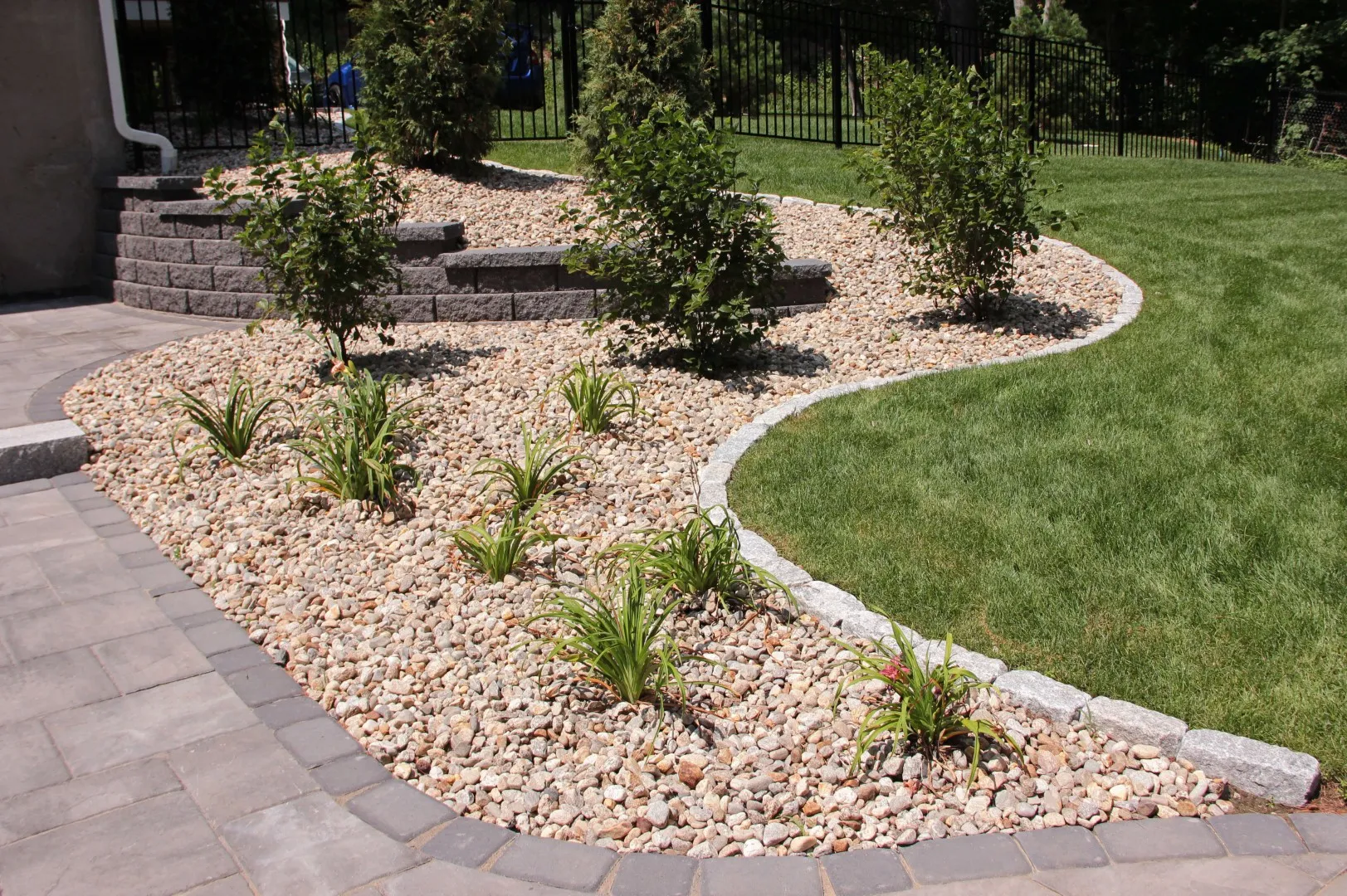
At Groundhog North, we emphasize controlling erosion to protect both your property and shoreline habitat. We combine living plants with structural measures to slow water flow and secure soil. Our common strategies include:
- Vegetative Barriers: We use native plants and grasses that anchor soil and form a living buffer between water and vulnerable areas.
- Hardscaping Techniques: Features like stepping stones, gravel beds, and terraces break up runoff and reduce soil loss.
- Retaining Structures: Properly built walls and terraces from our team hold terrain steady during heavy rains and fluctuating water levels.
We tailor these methods to each site’s needs, especially where changing lake levels increase erosion risk.
How do landscaping techniques combine with hardscaping for effective soil stabilization?
Combining plants with hardscaping creates a strong defense against erosion. Native vegetation binds soils while rock terraces or strategically placed walls slow runoff and allow plants to establish. Together, this approach protects soil, supports biodiversity, and keeps slopes stable.
When should you consult us for erosion issues on your waterfront property?
Contact Groundhog North if you notice signs like exposed roots, sudden soil loss, or persistent pooling. We understand site-specific conditions, regulations, and effective solutions for NH lakeside properties. We assess problems, design tailored solutions, and manage permitting and construction to protect your shoreline effectively.
Frequently Asked Questions
What are the benefits of using permeable pavers for erosion control?
Permeable pavers are an excellent erosion control solution for lakefront properties as they allow water to filter through the surface, promoting natural groundwater recharge. By minimizing surface runoff, they reduce flash flooding risks and help control soil erosion. Additionally, permeable pavers can filter pollutants, improving water quality in nearby lakes and streams, making them both environmentally-friendly and functional choice for landscape design.
How can I maintain my retaining walls to ensure their longevity?
Proper maintenance includes regular inspections for cracks or shifting and ensuring drainage systems function effectively to prevent water buildup. Vegetation growing near retaining walls should be managed, as roots can compromise structural integrity. Cleaning the wall and ensuring it is free from debris will also help maintain both its aesthetic and physical stability. Prompt repairs for any damage will extend the lifespan of your retaining wall.
Is there a specific season that’s best for installing hardscaping features?
The ideal season for installing hardscaping features is typically late spring to early fall. This period allows for milder temperatures and drier conditions, which are crucial for proper installation and settling of materials. Winter can be challenging due to snow and ice, while the wet season could hinder the installation process and affect material integrity. Planning installations during drier seasons ensures a smooth process and optimal results.
What types of plants are best for erosion control in lakeside landscapes?
Native plants are often the best choice for erosion control in lakeside landscapes as they have deep root systems that stabilize soil. Species such as switchgrass, sedges, and other perennials are particularly effective for creating vegetative barriers. These plants not only prevent erosion but also enhance biodiversity and provide habitat for local wildlife. Incorporating these plants into landscaping will contribute to environmental health and improve the aesthetic value of your property.
How do I determine if I need professional landscaping help for erosion issues?
If you observe signs of erosion such as exposed roots, sediment buildup near water bodies, or noticeable changes in your landscape’s slope, it is time to consult a professional. Additionally, if you notice pooling water that doesn’t drain or soil threatening your structure, it’s essential to get expert input. Professionals can assess the situation and recommend effective erosion control strategies tailored to your property needs.
What regulations should I be aware of when landscaping near lakes?
When landscaping near lakes, it’s important to consider local regulations regarding shoreline protection and erosion control practices. Many regions have specific guidelines related to the type of materials that can be used, the distance from the water that landscaping can occur, and the preservation of native vegetation. It’s advisable to consult local authorities or landscaping professionals familiar with regulations to ensure compliance and avoid potential fines or restoration requirements.
