
Pavers generally outperform concrete for New Hampshire patios because freeze-thaw cycles crack solid concrete slabs, while interlocking pavers flex and can be replaced individually. At Groundhog North, we design paver patios, walkways, and pool hardscaping built for New England winters, giving you a durable, repairable outdoor living space that holds up season after season.
Key Takeaways
Concrete needs resealing every 2-3 years to hold up against New Hampshire’s freeze-thaw cycles.
Pavers shift and settle individually, which allows drainage and reduces frost heave damage in cold climates.
Concrete cracks from temperature swings; pavers stay intact by moving independently with the ground.
Replacing a paver costs less than resurfacing concrete when individual units fail from winter weather.
What Makes Concrete and Pavers So Different?
Material choice shapes everything about your backyard patio project, from the first design sketch to how the surface looks a decade later. The concrete patio vs pavers question is one of the first big decisions we walk New Hampshire homeowners through when planning an outdoor living space. Both materials hold up well and look sharp when installed correctly, but that’s where the similarities end.
Do concrete and pavers perform the same way outdoors?
Not even close. Once installed, these two materials behave very differently, especially with New England’s harsh freeze-thaw cycles. That difference matters more here in New Hampshire than almost anywhere else, since seasonal swings put real stress on any outdoor surface.
If you’re weighing a concrete patio New Hampshire installation against a paver patio installation NH project, we always encourage you to think beyond looks alone:
Flexibility under stress: Pavers shift slightly with ground movement; solid concrete slabs crack under the same pressure.
Repair scope: We can swap damaged pavers individually, while concrete surfaces often need larger patch or replacement work.
Design range: Stamped concrete offers strong value, flexible patterns, and manageable long-term upkeep for many properties.
We think a smart patio materials comparison weighs cost, climate resilience, and future repair needs together, not just upfront price.
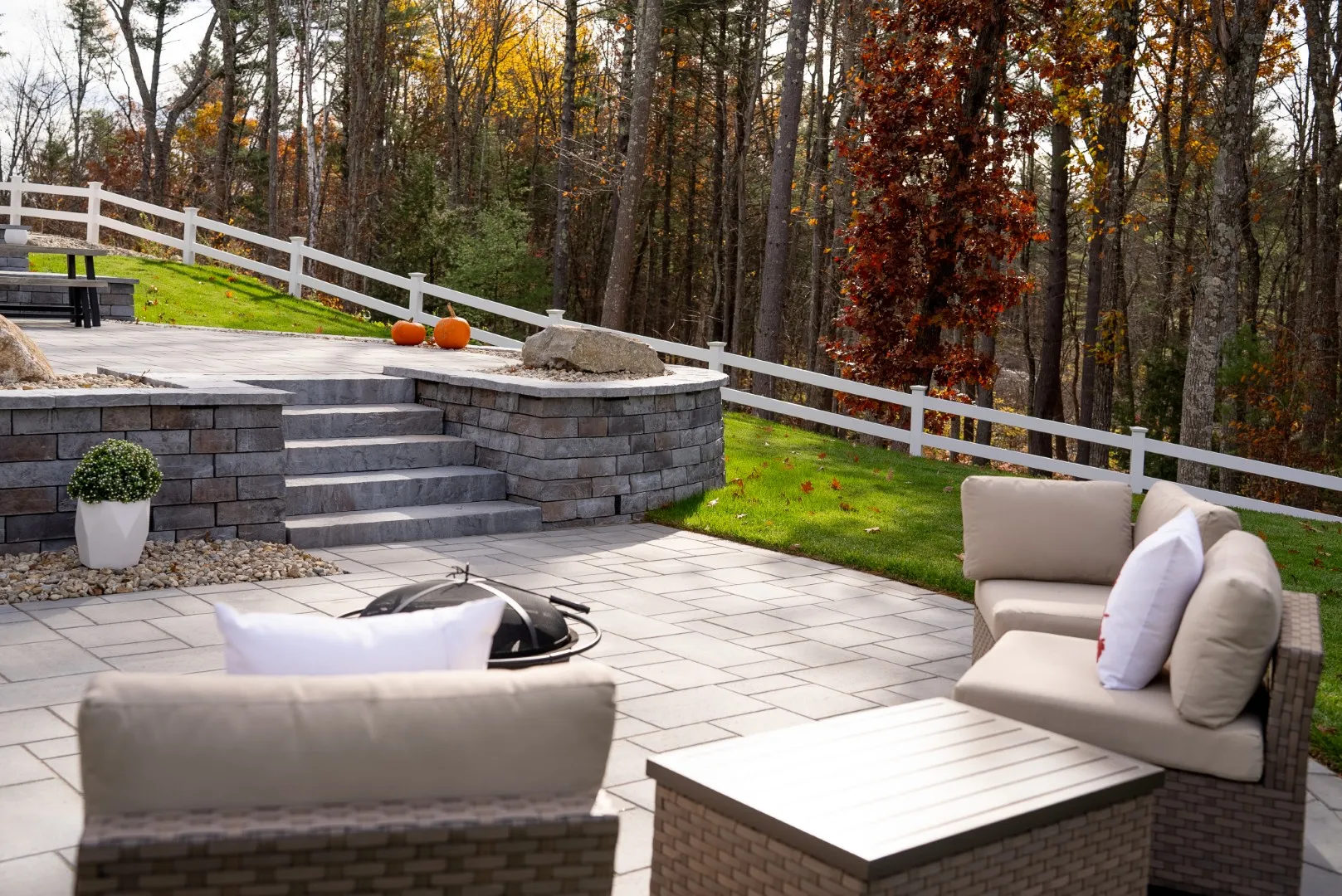
How Do They Hold Up Through NH Winters?
We’ve put every patio surface to the test across New Hampshire, and durability separates the materials fast. Cold snaps, spring thaws, and the freeze-refreeze pattern that defines a New England winter all work against weak joints and rigid slabs alike. If you’re comparing concrete patio vs pavers, here’s how each surface reacts once temperatures start swinging.
Slab surfaces move as one connected piece. When frost heaves the ground underneath, that single mass has nowhere to flex, so cracks tend to form along the weakest points. Interlocking units behave differently: individual pavers shift slightly with the ground, absorbing movement instead of fighting it. That’s a big reason so many New Hampshire homeowners we work with lean toward paver systems for long-term stability.
Which Lasts Longer, Pavers or Concrete, in New Hampshire?
Longevity is one of the most common questions we hear from New Hampshire property owners before they commit to a paver patio installation NH project. We can lift and reset individual paver units when winter settling occurs, which extends the surface’s usable life. A cracked slab, by contrast, usually needs patching or full replacement, while a damaged paver gets swapped out on its own.
Does Stamped Concrete Crack in Cold Climates?
In the stamped concrete vs pavers debate, stamped surfaces carry the same underlying material as any concrete patio New Hampshire, so they inherit the same cracking risk. Decorative texture doesn’t add flexibility. We find pavers generally win on repairability here, since a heaved or stained paver gets replaced on its own instead of forcing a patch job across the whole patio.
Which Patio Option Fits Your Property?
Property shape, budget, and long-term plans usually point you toward one clear winner. Material choice shapes how your concrete patio vs pavers project looks, functions, and holds up through New Hampshire winters for years down the road, so that decision deserves more thought than picking whatever’s cheapest this season.
We’re upfront about which material we think fits your property, rather than pushing whatever’s easiest to install. That kind of honesty matters when comparing pavers vs concrete NH homeowners actually deal with, freeze-thaw cycles, road salt, and heavy snow loads included.
Does the shape of my yard matter?
Absolutely. Irregular lots or curved patio designs often favor pavers, since individual units bend around obstacles more easily than a single slab. Straight-edged, rectangular spaces work well for either material, so shape alone won’t settle the question for you.
A few quick questions help narrow things down:
Is the patio going near a pool, walkway, or steps?
Does the property see heavy freeze-thaw stress each winter?
Is budget or long-term durability the bigger priority?
At Groundhog North we handle paver patio installation NH projects for homeowners across the region.
FAQ
Which material handles New Hampshire freeze-thaw cycles better?
Pavers outperform concrete because they flex and shift individually with ground movement, while solid concrete slabs crack under that same frost heave pressure.
How does repairing a paver patio differ from repairing concrete?
We can swap out a damaged paver on its own, while concrete surfaces often need larger patch or full replacement work after cracking.
Who builds paver patios designed for New England winters?
We do. Groundhog Landscaping, based in Derry, NH, designs paver patios, walkways, and pool hardscaping built to withstand New England’s freeze-thaw cycles.
Conclusion
The choice between concrete and pavers comes down to what matters most to you: upfront savings and simplicity, or long-term flexibility and visual appeal. Both deliver solid results for New Hampshire patios, and either way, you’re investing in an outdoor space that’ll serve your home well for years to come. The real key is matching the material to your lifestyle, your budget, and how you plan to use that space. When you’re ready to move forward, we’d love to talk with you about your property’s climate and soil, and help you make the call that’s right for you.
