
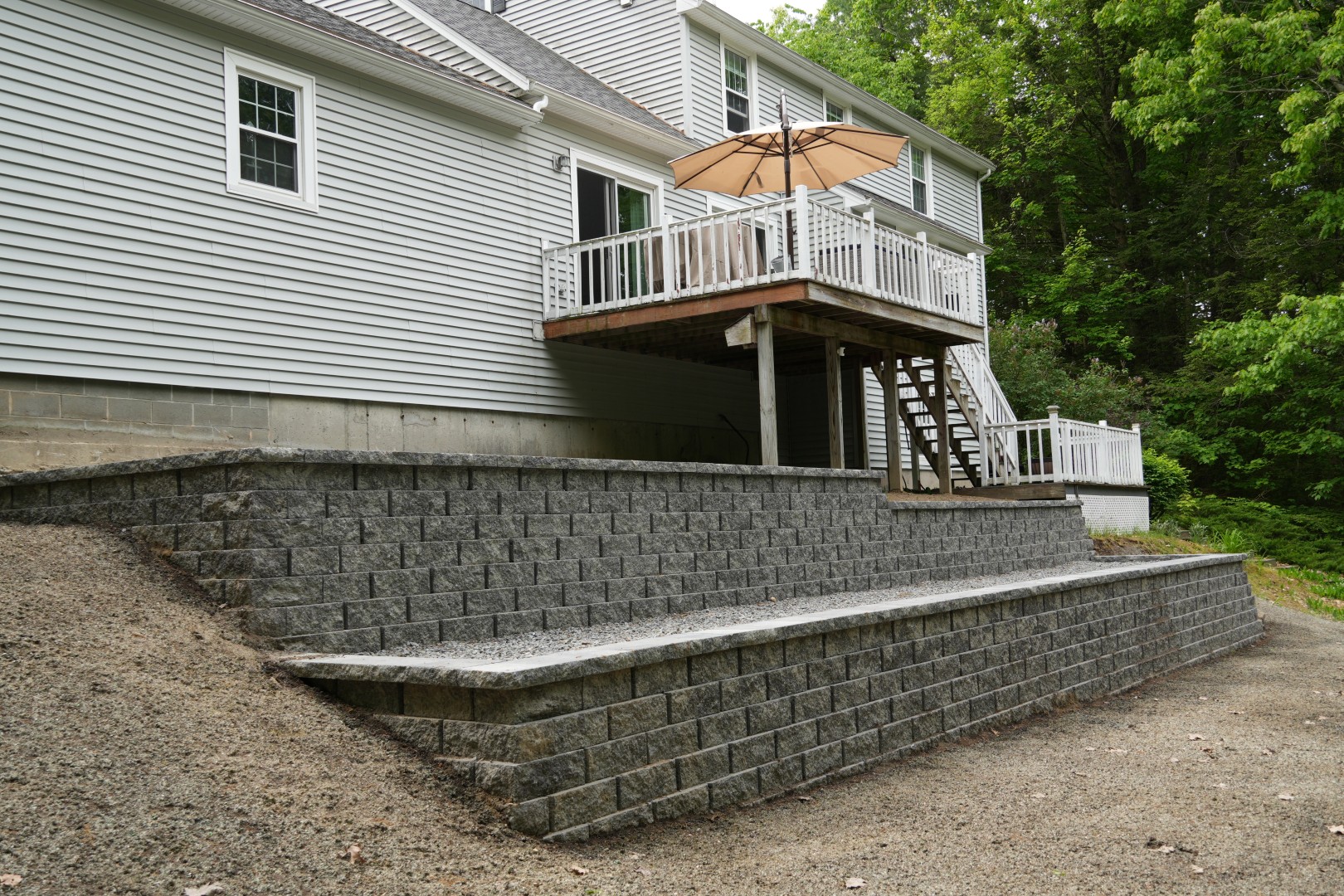
At Groundhog North, we see it all the time: a retaining wall that looked solid for years suddenly starts cracking, leaning, or bowing. Nine times out of ten, the culprit is drainage. When water can’t escape from behind a wall, it builds up pressure that the structure was never built to handle, and that’s when things start to go wrong. In this article, we’ll walk you through the drainage solutions we rely on for retaining walls, the warning signs to watch for, how we install these systems, and how to keep everything working the way it should for years to come.
Key Takeaways
We install proper drainage systems to prevent water pressure from causing retaining wall failure over time.
Our 60-employee crew grades soil correctly to redirect water away from wall foundations in New Hampton, NH.
We use gravel backfill and perforated pipes to channel water safely behind every retaining wall we build.
Poor drainage causes soil erosion and wall bowing, so we test water flow before finishing each installation.
What Are the Best Drainage Systems Behind Retaining Walls?
Good drainage is what keeps hydrostatic pressure from building up and putting stress on a wall. We use a mix of drainage pipes and backfill materials to get the job done right, and picking the right combination makes a real difference in how long your wall lasts and how well it performs.
Which drainage pipes and backfill materials work best locally?
We like to source our drainage pipes and backfill materials locally, since that gives us the best match for our region’s soil and weather. Here’s what tends to work well:
Perforated Pipes: These let water flow through while keeping sediment from clogging things up.
Gravel Backfill: Gravel drains well and gives your wall the structural support it needs. A well-graded aggregate helps water move away from the wall quickly.
Local Suppliers: We work with local suppliers so we always have the right materials on hand for your specific property and conditions.
How do different drainage designs reduce water pressure behind walls?
There are a few different ways to cut down on water pressure behind a wall, and knowing how each one works helps us pick the right fit for your property.
Grading and Sloping: Getting the grade right means water flows away from the wall instead of pooling against it.
Active Drainage Systems: Drainage mats and pipes collect water and redirect it, taking a lot of pressure off the wall.
Permeable Pavers: Permeable paving lets surface water soak through instead of running toward your wall, which keeps less water building up nearby.
What Signs Tell You There’s a Drainage Problem Behind Your Retaining Wall?
Catching a drainage problem early can save you from a much bigger repair down the road, so it pays to know what to look for.
How to spot structural damage caused by poor drainage?
Here’s what we tell our clients to keep an eye on:
Cracks in the Wall: Cracks are usually a sign that water pressure is putting stress on the wall.
Bowing or Leaning Walls: If a wall starts to lean, the soil behind it is likely saturated and pushing against it.
Water Pooling Behind Walls: Standing water near the wall is a pretty clear sign that drainage isn’t working the way it should.
What role does soil erosion play in drainage issues?
Soil erosion and drainage problems tend to feed off each other. Here’s how:
Increased Water Flow: Eroded soil weakens the ground behind the wall, which makes drainage even less effective.
Erosion Control Measures: Things like planting vegetation help stabilize the soil and keep drainage working properly.
Long-Term Implications: Left unchecked, erosion can wear away at the foundation supporting your wall over time.
How Does Groundhog North Install Effective Drainage Systems?
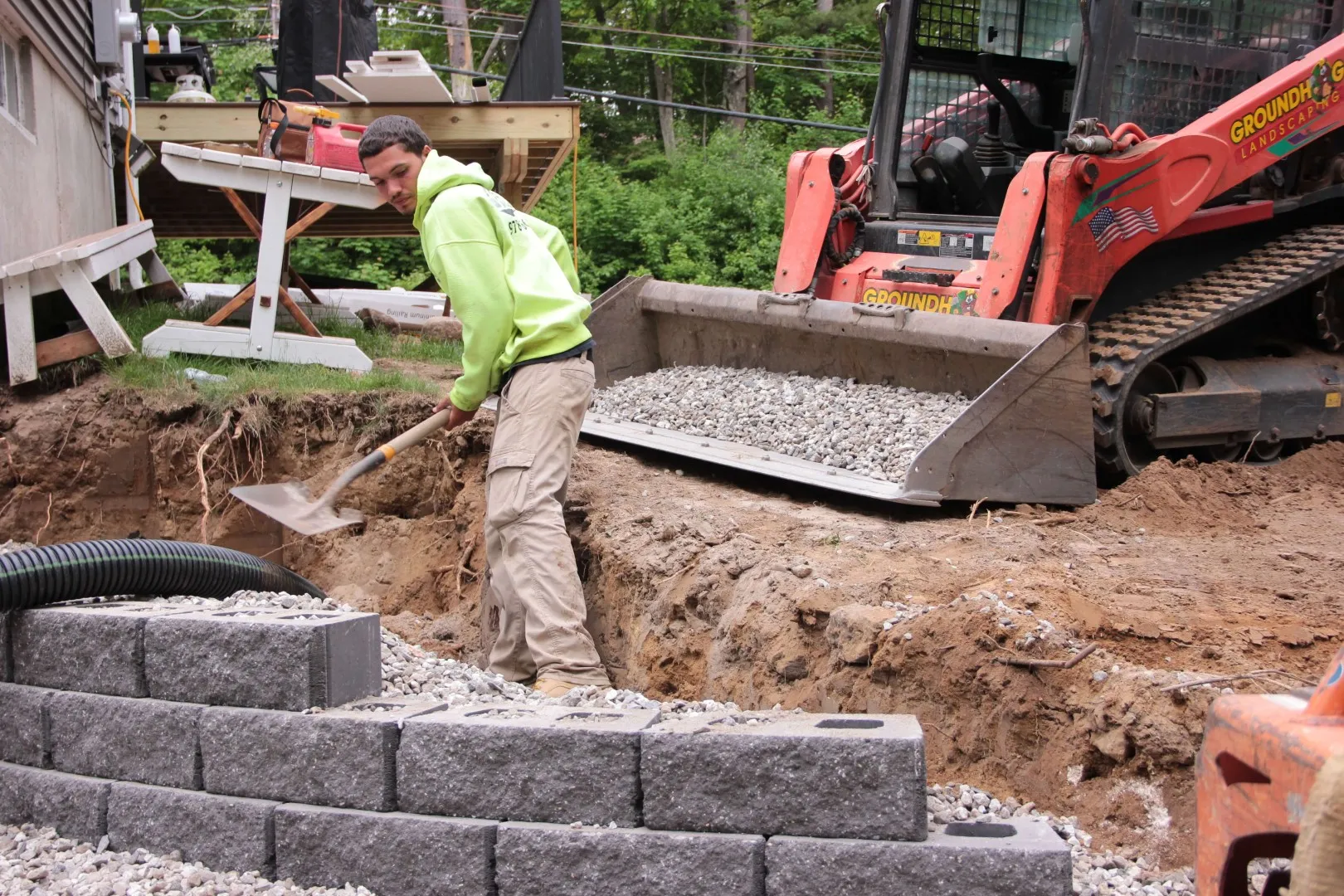
Installing drainage the right way takes planning and know-how, especially for understanding local conditions. Here’s how we approach it.
What step-by-step process ensures proper drainage installation?
Our process usually looks like this:
Preparing the Site: We take a close look at your property first, so the drainage system fits the landscape and conditions you’re working with.
Executing the Drainage Design: We carefully place the drainage pipes and gravel backfill to make sure the system works as efficiently as possible.
Final Checks: Before we wrap up, we inspect everything to make sure it’s working properly.
Why is local expertise important for drainage installation in New Hampshire?
Working with a team that knows the area makes a real difference. That means:
Understanding Local Soil Types: Knowing what kind of soil you’re dealing with helps us choose the drainage system that will actually work for your property.
Weather Impact on Drainage Needs: We factor in how New Hampshire’s weather affects drainage, so your system performs well all year round.
Regulatory Considerations: We stay on top of local regulations so your project stays compliant from start to finish.
How Can You Maintain and Fix Drainage Behind Retaining Walls?
Keeping up with routine maintenance goes a long way toward avoiding expensive repairs later on.
What routine checks keep drainage systems working well?
Here’s what we recommend checking regularly:
Inspecting Drainage Pipes and Outlets: Check for blockages and make sure water is flowing freely.
Checking for Erosion or Collapses: Keep an eye on the surrounding area for signs of soil erosion before it becomes a bigger issue.
Evaluating Plant Growth Around Systems: Make sure plants and roots aren’t blocking your drainage pathways.
How to fix common drainage problems without a full rebuild?
The good news is most drainage issues don’t require tearing everything out and starting over. Some simple fixes we use include:
Simple Grading Adjustments: Tweaking the slope around the wall can redirect water away and improve drainage right away.
Using Gravel and Soil Amendments: Adding gravel helps keep backfill permeable, which improves water flow and reduces pressure.
Monitoring Vegetation for Drainage Support: The right plants can help control erosion while supporting your drainage system.
If you’re noticing any of these warning signs or just want to make sure your retaining wall’s drainage is in good shape, we’re happy to take a look and help you find the right solution.
FAQ
Why does drainage matter behind a retaining wall?
Without proper drainage, water builds up behind the wall and creates hydrostatic pressure the structure wasn’t built to handle, leading to cracking, leaning, or bowing over time.
What materials does Groundhog North use for drainage systems?
Groundhog North’s 60-employee crew uses perforated pipes and gravel backfill, sourced from local suppliers in New Hampton, NH, to match regional soil and weather conditions.
What warning signs indicate a drainage problem behind a wall?
Cracks, bowing or leaning walls, and water pooling near the structure all signal that water pressure is stressing the wall and drainage isn’t working properly.
Conclusion
In the end, drainage is what separates a retaining wall that lasts from one that eventually fails. It’s not the flashy part of the project, but it’s the part doing all the heavy lifting behind the scenes. When water has somewhere to go, your wall stays put, your landscape stays healthy, and you get to enjoy your yard instead of worrying about it. That’s the real payoff—peace of mind built right into the ground.
